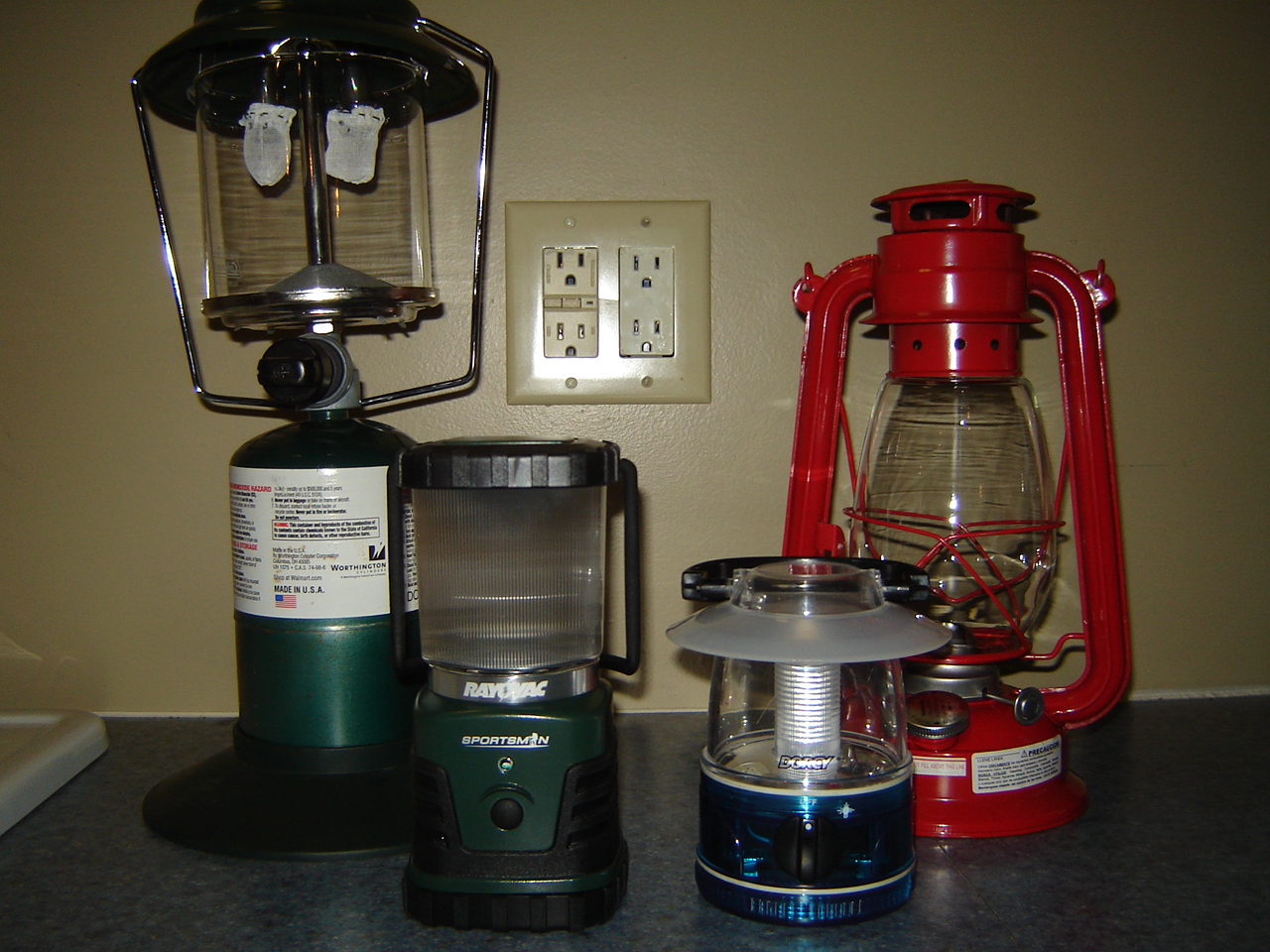
 Since I’m into lighting options these days, I figured I would compare the three most commonly used lanterns: propane, kerosene, and battery-powered to see how they stack up to each other. In this case, I’m comparing a Coleman Two-Mantle Propane Lantern, Stansport Kerosene Lantern, Rayovac Sportsman LED Lantern, and I threw in another small battery-powered the Dorcy Mini Brite Lantern as it’s been a camping favorite with the kids for quite some time. Pricing ranges from under $10 for the Dorcy to about $35 for the Coleman propane lantern.
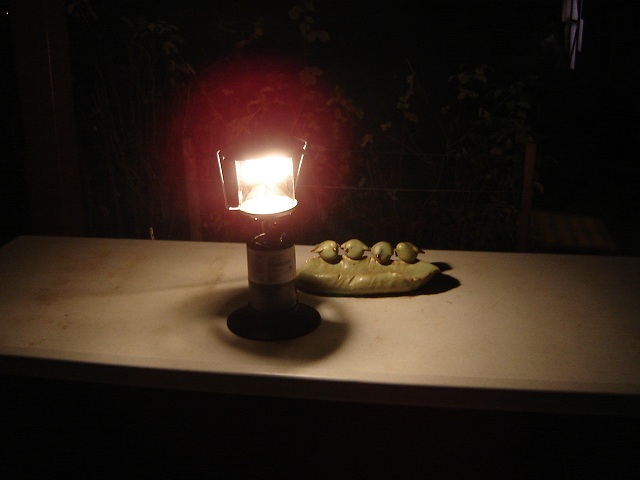
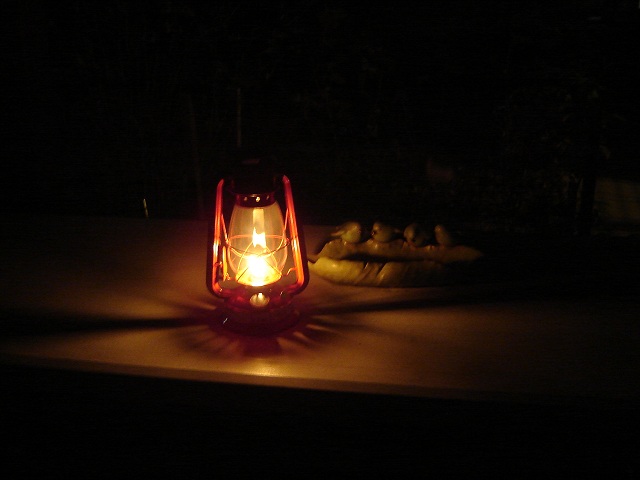
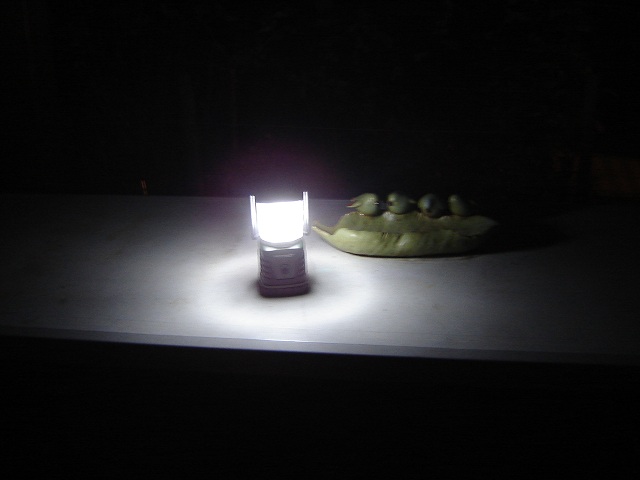
I figured the easiest way to compare them is to put them in a table and list the following attributes: costs (for unit and others besides fuel), anticipated working times (according to manufacturer estimates or my best guess), fuel to working time cost (comparing cost of fuel to estimated burn time as cost/hour of use), relative brightness (via my own pictures), and my comments at the end.
| Image / Brightness (click to enlarge) | Costs | Working Time | Fuel/Time Cost ($/hour) |
|---|---|---|---|
   |
Unit = $34.99
OTHER COSTS: Additional Mantles=$6.99 Safety Post=$39.99 (used to connect and raise lantern to 20 pound tank) |
*assumed tank is never 100% full |
Prices vary by geographic location and more:
*if you already own a tank then cost should be less than half those stated above |
   |
Unit = $16.48
OTHER COSTS: Additional Wicks=$7.99 |
Can’t find data but from my experience using 32oz. bottle of kerosene I found: ~5-6 hours on med/high per one 8 oz. fill ~10-12 hours on real low per one 8 oz. fill |
*price can be significantly less if buying kerosene in larger quantities/bulk |
   |
Unit = $29.19
OTHER COSTS: NONE |
Using 3 D-cell batteries: -40 hours on high -90 hours on low |
Using 12 pack of *Rayovac ($12.59 per pack or $3.14 per 3 batteries): -0.07/hour on high -0.04/hour on low *Using Duracell or Energizer will cost more but not too much |
  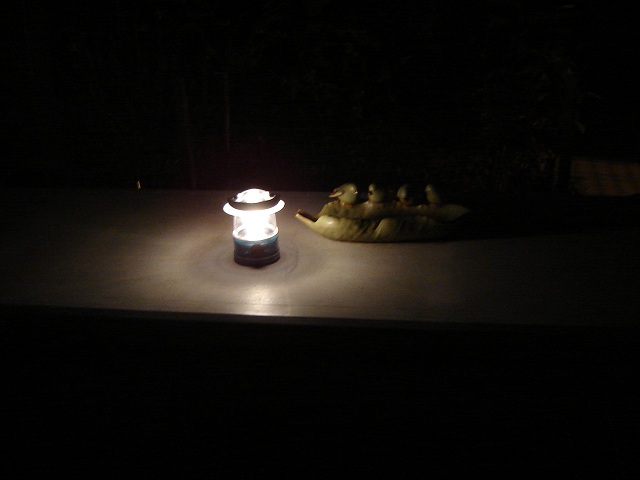 |
Unit = $8.99
OTHER COSTS: NONE |
Using 4 AA-cell batteries: -4 hours (only one setting) |
Using 24 pack of Rayovac ($11.20 per pack or $1.86 per 4 batteries): -$0.46/hour |
I would say the two biggest concerns would be cost to use and brightness. Granted, there are other potential costs but these are the biggest. In the cost to use category the Rayovac battery-powered lantern wins quite easily, though, a close second could be the kerosene lantern if you can buy lamp oil or kerosene in larger quantities. The other concern, brightness, is obviously relative in the pictures provided but I would say that the Coleman propane lantern is the winner followed by the Rayovac. All-in-all, therefore, I would say that the Rayovac is the clear winner, in my opinion. To be fair, however, I do not own a good quality kerosene lantern so it could still turn out to be a close second.
Leave a Reply