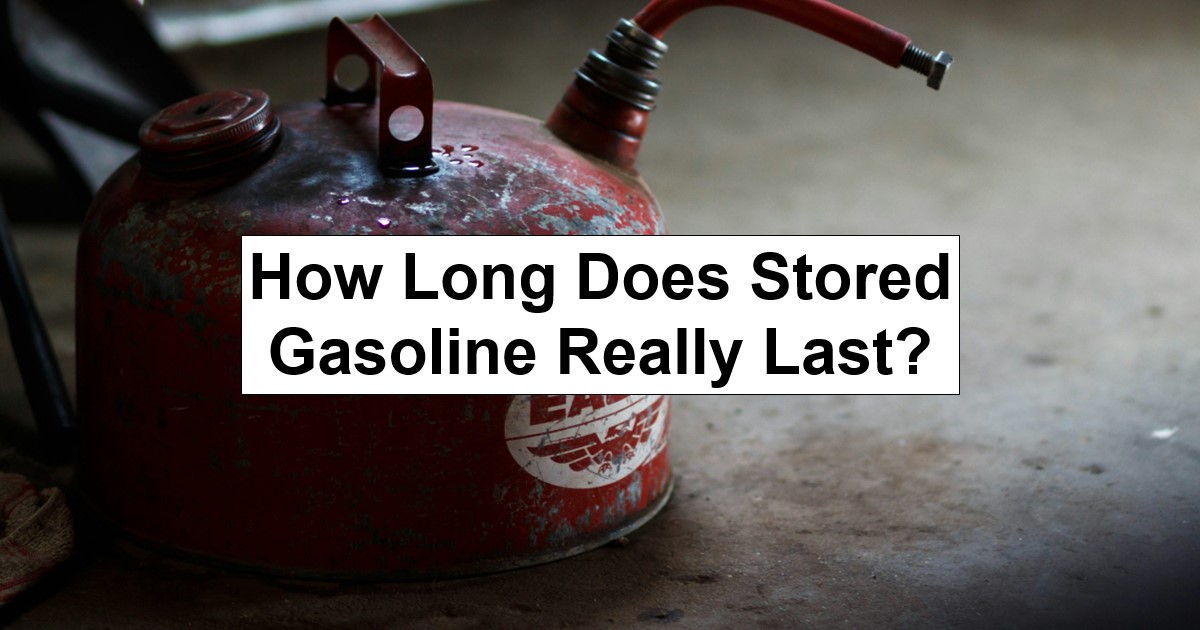
One of the more common questions I get from people starting their preparedness journey is some variation of: “How long can I actually keep gasoline before it turns into varnish?” It’s a fair question because, let’s be honest, storing gas for “just in case” isn’t exactly cheap, and the last thing you want is to pour a 5-gallon can of old gas into your car only to have it gum up the fuel injectors.
The official word from gas stations and oil companies is usually pretty conservative, often suggesting a shelf life of only three to six months. But if you talk to anyone who has lived through a long-term fuel shortage or spends time in the thick of survivalist circles, you’ll hear stories that vary wildly. Some folks report fuel failing in months, while others have successfully used stabilized gas that was years old.
The truth is that gasoline is a complex cocktail of chemicals designed for specific performance metrics, and those metrics start changing the moment that nozzle clicks off at the pump.
The Science of Why Gas Goes Bad
To understand how long you can store fuel, you first have to understand what you’re actually buying. One of the biggest factors people overlook is the seasonal blend. Gasoline sold in the winter is formulated with higher volatility—meaning it evaporates more easily—to help engines start in freezing temperatures. Summer blends are less volatile to prevent excessive evaporation and smog during the heat.
Weirdly, if you store a bunch of winter-blend gas and try to use it in the middle of a 100-degree July day, you might run into vapor lock issues because the fuel is essentially trying to turn into a gas while it’s still in your fuel lines.
Then there is the problem of ethanol. Most gas you find at the corner station contains up to 10% ethanol (E10). The problem is that ethanol is hygroscopic, which is just a fancy way of saying it loves to soak up moisture from the air. Once that fuel absorbs enough water, it undergoes phase separation, which means the ethanol and water bond together and sink to the bottom of the tank, leaving a layer of low-octane, poor-burning sub-gasoline on top. If your car’s intake is at the bottom of the tank, which I think most are, it’s going to suck up that water-ethanol mix first, and that’s a recipe for problems.
This is why, whenever possible, I advocate for buying non-ethanol gasoline for long-term storage for emergency preparedness. Yes, it costs more per gallon, but the peace of mind is worth the extra couple of bucks when you consider the cost of a ruined fuel system precisely when you need it most. Obviously, if you live in an area where non-ethanol isn’t available, you have to work with what you have, but you’ll need to be more disciplined about your rotation schedule.
Winning the Storage War
So, how do we actually beat the clock? In my experience, it comes down to two things: the container and the stabilizer. If you’re storing gas in those cheap, thin plastic cans from the big-box store, like I do, you’re already behind. Those cans breathe, allowing moisture in and volatiles out. A high-quality, airtight metal or heavy-duty plastic container is a must if you really want to see that one-year storage mark turn into a multi-year worry-free one. Personally, I rotate every years, so it’s less of a concern for me.
But the real secret is a high-quality fuel stabilizer. There are a lot of options on the shelf, but I’ve been a loyal user of PRI-G for a long time. While some stabilizers just try to slow down the degradation process, PRI-G is designed to actually preserve the fuel’s integrity and can even “refresh” fuel that has started to age. I personally use PRI-G in every single drop of gas I store, and I make it a point to rotate my supply every year for “just in case” purposes. I’ve never had a single issue with a lawnmower, chainsaw, or generator starting up on that year-old fuel and I doubt I ever will.
(If you want more on why I trust this specific brand, you can check out my review of PRI-G fuel stabilizer where I go into the specifics of why I think it’s hands-down the best available for preppers. That said, I also use AMS Oil more recently, so it’s possible that their fuel stabilizer is just as good, possibly better, but I haven’t tested it fully yet.)
Realistic Timelines and Expectations
If you do everything right, like using non-ethanol fuel, treating it immediately with a product like PRI-G, and storing gasoline in airtight containers in a cool, dark place, then how long will it last?
The consensus among many in the survival community, and certainly reflected in the historical precedents of people living through serious problems, is that you can safely get 12 to 24 months out of well-treated fuel. Some have pushed it to three or even five years, but you’re entering the gamble zone at that point. Like I said, for me, a one-year rotation is the sweet spot. It’s manageable, keeps the stock fresh, and it ensures that if I ever truly need the fuel, it’s going to perform as expected.
It’s easy to buy a few cans of gas and shove them in the back of the garage or shed, but without a stabilizer and a rotation plan, you’re potentially stockpiling future trash. And with the way gas prices are rising recently, that’s a bad choice.
Whatever you do, treat your fuel storage as a critical system rather than a “when’s the last time I did that?” chore. You’ll thank yourself if/when the time comes to really need it.
Leave a Reply