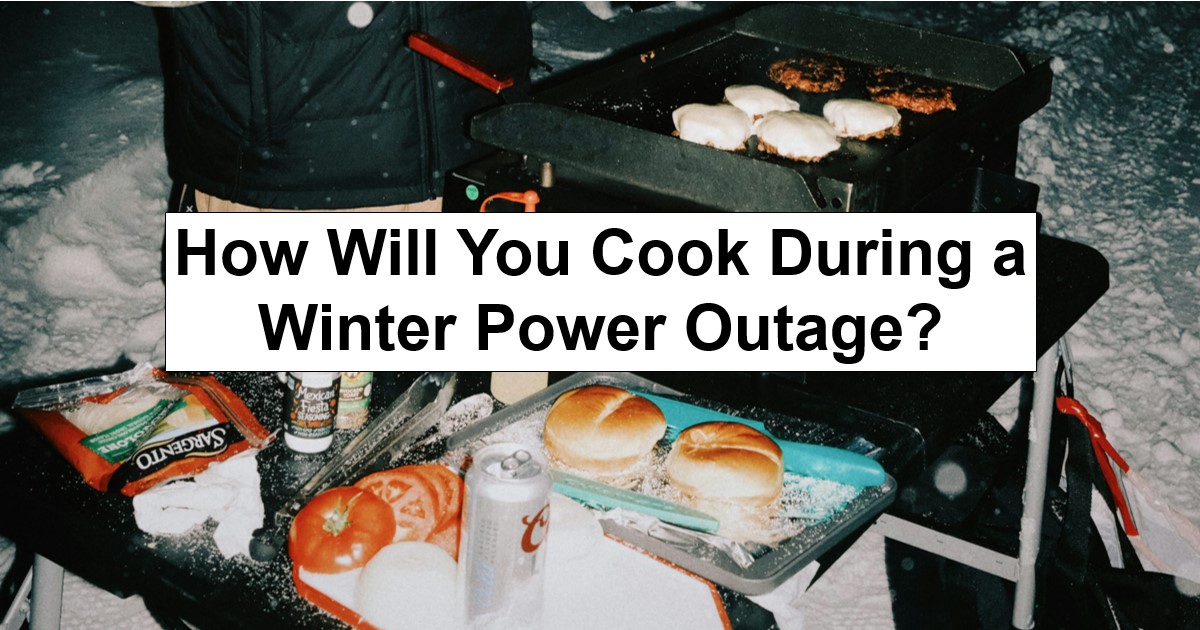
When the power goes out in the middle of a winter storm, the house gets quiet in a way that is honestly a bit unsettling. You notice the hum of the refrigerator is gone, the blower on the furnace has stopped, and if you have an electric range, your ability to make a hot meal basically vanished. (And if you have kids, there’s probably a sound of electronic gadgets hitting the floor when the internet stops working.)
I’ve written about how lucky we usually are in the surviving “Snowmageddon” post, but it could’ve easily gone awry. After all, it’s one thing to talk about preparedness in the abstract, but it’s quite another when you are hungry, cold, and realizing your kitchen is effectively a museum of useless appliances, lol.
Practical, evidence-based planning (in the form of preparedness) is about the only thing that keeps a minor inconvenience from becoming a genuine crisis. I have always advocated for focusing on what happens before the disaster strikes to mitigate/minimize the effects. No doubt, if you wait for the snow to pile up before wondering how to boil water, you are already behind the curve. The goal is to have a system in place that doesn’t require heroic measures or risky, even deadly, improvisations.
The “Go-To” Outdoor Solutions
The most obvious options for most of us are sitting right on the back deck. Your propane grill or charcoal smoker is a powerhouse for emergency cooking, provided you have the fuel staged ahead of time. I’ve seen plenty of discussions on survivalist forums about the merits of different fuels, and clearly, having a couple of full propane tanks or several bags of charcoal is a foundational part of any stockpile no matter your choice.
However, there is a massive “but” here. You cannot, under any circumstances, bring those grills inside. I know it seems tempting when the wind is howling at forty miles per hour and the temperature is sub-zero, but the risk of carbon monoxide poisoning or starting a house fire is simply way too high. Most (let’s say ALL) of your heavy-duty cooking should happen outdoors, regardless of the weather. Granted, if you have a woodstove, you are in a much better position. A good woodstove, after all, is a dual-purpose miracle in a winter outage, providing both heat and a surface to simmer a pot of soup or boil water to make it potable. (Unless, of course, your wood stove is a damn insert, like with the house I bought. Argh!) It’s one of the few ways to safely cook “indoors” because it’s properly vented to the outside.
For those of us who have spent time learning how to survive without electricity, the transition to outdoor cooking is more than a mindset shift because you must be prepared to brave the elements for a long time simply to get a meal ready. And if the weather is truly life-threatening, that’s when you pivot to your secondary and emergency backups.
Tactical Backups and Specialized Gear
When the propane or charcoal grill is overkill or the weather is just too miserable to stand outside for a long time, you’ll need a different plan. I’ve discussed off-grid cooking many times, and I am a big fan of having multiple layers of redundancy, but not all options are equal. A simple camp stove, like a Coleman two-burner, is a reliable workhorse. Although these are designed for outdoor use, they are much easier to shield from the wind than a full-sized grill.
I also keep things like rocket stoves and solar ovens in my inventory. A rocket stove is incredibly efficient, using small twigs and bits of wood to create an intense heat. It’s also a great way to save your “good” fuel like propane for when you really need it. Solar ovens are a bit more finicky in the winter (the sun needs to be out, obviously) but they are a fantastic option if the skies clear up after a storm AND you’re willing to wait. I’ve found that even in cold temperatures, a well-insulated solar oven can get the job done if you have decent UV exposure, time, and are willing to rotate it to point at the sun every twenty minutes or not.
If you’re looking for something even more compact, emergency stoves like an Esbit or a small alcohol stove have their place. They aren’t going to cook a four-course meal, but they will boil enough water for a cup of coffee or a dehydrated meal. As with nearly all stoves, they are NOT to be used indoors.
These small setups are perfect for what I call “micro-cooking” if you can find a decent place outdoors that’s out of the elements and wind. Of course, you’re not trying to feed a crowd; you are just trying to get something warm into your body to keep your core temperature and spirits up. (If you’re interested in more ways to keep the chill away, you might want to check out some winter warmth hacks I put together.)
Safety, Ventilation, and the “No-Cook” Reality
I cannot stress this enough: safety is the most critical part of this entire equation. Every year, people die during power outages because they brought a charcoal grill or a gas camping stove inside. Or they ran a generator in their garage. Or their house burned down because they used something indoors that they shouldn’t have.
Remember that carbon monoxide is a silent, odorless killer that will put you to sleep before you realize anything is wrong. If you must use a small butane stove indoors for a very brief period, you must have a window cracked and a working, battery-operated carbon monoxide detector nearby. Personally, I prefer to keep anything with flames outdoors where they belong.
This is where your cooking without power strategy should include a “no-cook” phase. Sometimes, the smartest move is to just not cook at all. If the house is freezing and the wind is howling, crack open a can of Chunky soup or some chili and eat it cold. Yeah, it’s not ideal, but a full belly is a happy belly. MREs (Meals Ready to Eat) are another option since they often come with chemical heaters that can be used indoors. Again, it might not be the most gourmet experience, but it keeps you safe and fed without risking a fire or CO buildup in your home.
Lessons Learned for the Next Storm
- Stage your fuel early: Don’t be the person waiting in a line at the hardware store for propane an thirty minutes before the snow starts.
- Safety equipment is non-negotiable: Keep a fire extinguisher in the kitchen and ensure your CO detectors have fresh batteries.
- Practice before the lights go out: Try cooking a meal on your backup stove on a random Tuesday. You don’t want to be reading the instructions by candlelight while your fingers are numb only to find out it doesn’t work like you expected.
- Prioritize supplies over gadgets: Stockpiling essential food you can eat cold should always come before buying the latest high-tech survival stove.
- Remember safety first: Use any stove not specifically intended for indoor use, outdoors only!
If you find yourself stuck inside with nothing but a bunch of cans and a Dutch oven, I actually have a resource with 900 Dutch oven recipes that might give you some ideas for when you can safely get a fire going outside again. And although I discuss strategies to prepare yourself and your family in my survival books, the fundamental principle remains the same: use your head and don’t take unnecessary risks because you didn’t think things through.
Stay safe, stay warm, and treat your emergency equipment with the respect it deserves!
Leave a Reply