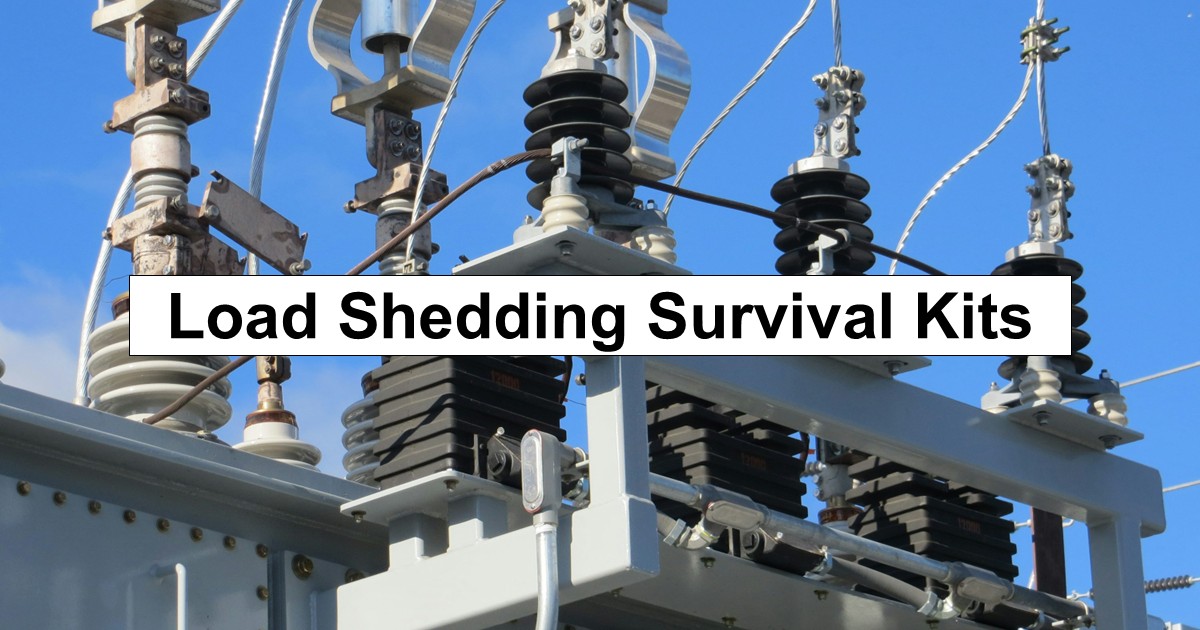
Have you heard of load shedding before? It’s basically the electric company purposefully cutting power to areas during scheduled times in order to avoid bigger problems down the road because of increasing consumer demand, a lack of maintenance, and probably a bunch of other reasons. It’s a common practice in developing countries and even places like Pakistan and Sri Lanka. As a comparison, it’s sort of like brownouts or rolling blackouts in the States, except planned.
But the article I read was about load shedding in South Africa. Apparently, power generation has been a problem there for nearly two decades. It’s so common that people must plan their activities around them, going so far as to preparing load shedding survival kits. According to the article, “Scheduled power cuts disrupt cooking, communication, lighting, and security. Without preparation, families risk food spoilage, safety hazards, and communication blackouts. A 2025 Survival Kit helps maintain basic needs and peace of mind during outages, allowing households to function smoothly until power is restored.”
I’d say so! Given our aging power grid, increasing demand, and an unyielding push to go green no matter what, I can foresee a future where load shedding becomes popular/incentivized/mandated in western Europe, possibly even in the States. Load shedding is already in the words as an emergency use option here in the States.
So, what can we learn from the folks who have had to put up with load shedding for over a decade? Although the article is mostly a sales pitch of equipment to buy, they discuss lighting, portable stoves, power banks (for keeping phones and small electronics charged), canned food and bottled water, battery-powered radios, first aid supplies, medications, sanitation and hygiene supplies, cash, assorted tools, safety items (e.g., fire extinguishers), and entertainment. Honestly, now that I look at the article a bit more, it leaves a lot to be desired. It’s at best “prepping 101” as far as I’m concerned.
What I didn’t see was any discussion about keeping food from spoiling by having the ability to keep a refrigerator or freezer powered. A simple 1500-watt power inverter and extension cord will do the trick, but there are any number of solar generators and, dare I say, gas generators that will certainly get the job done if you’re willing to pay for them.
How about staying cool in the heat or warm in the winter? Maybe have a battery-powered person fan if nothing else? How about a Mr. Buddy propane heater to take the edge off in the winter? Of course, there are plenty of ideas I’d recommend before we begin relying solely on equipment, such as warm clothing and sleeping bags for the winter or having plenty of water to drink and knowing a few ways to stay cool in the summer. Oh, and maybe some matches to light a fire.
I’m a huge fan of buckets for survival. When the power or water goes out, they can be an invaluable resource. Plus, buckets are a great way to store survival supplies; they stack nice, are relatively durable, and are portable, too. Have plenty of buckets.
I don’t recall seeing anything about water filtration. Yes, they mentioned having stored water, which is good, but unless you have a lot of water storage available, you’re going to want a good filter. And, while I used to recommend the Berkey systems with flying colors, I can’t any longer due to their extraordinary filter prices. But they are still among the best options if you can afford them.
See as though power outages tend to force people to do things they might not typically do, like light fires and burn candles, I’d say some smoke alarms and carbon monoxide detectors are in order. After all, a fire extinguisher does little good if a fire has gotten out of hand because you didn’t realize it in time.
There’s plenty more regarding preparedness that I cover in my survival course if you’re interested in my extended take on the topic, but with regards to surviving load shedding events, I’d say that the biggest concern is an abundance of fuel, fluids, and batteries. Stuff that keeps everything going until the power gets back on, like propane for cook stoves, batteries for flashlights, and gasoline for generators. That sort of thing. Granted, it’s not always easy to stockpile these items, especially regarding safety and housing codes, so you’ll need to consider how best to do so.
If nothing else, consider what items are most important to you where you live and given your needs. For instance, is do you have a dozen kids who will gnaw off your foot if they’re not feed three squares a day? If so, you’d better consider how to keep the cook stove going. If you’re elderly or live in a horribly cold environment, then keeping plenty of propane on hand to stay warm might be a bigger priority. Got a trophy wife that refuses to live without the entire house lit up like a celebrity gala? Then, you’d better figure out how to keep that generator running nonstop.
What you can’t do is nothing.
Leave a Reply