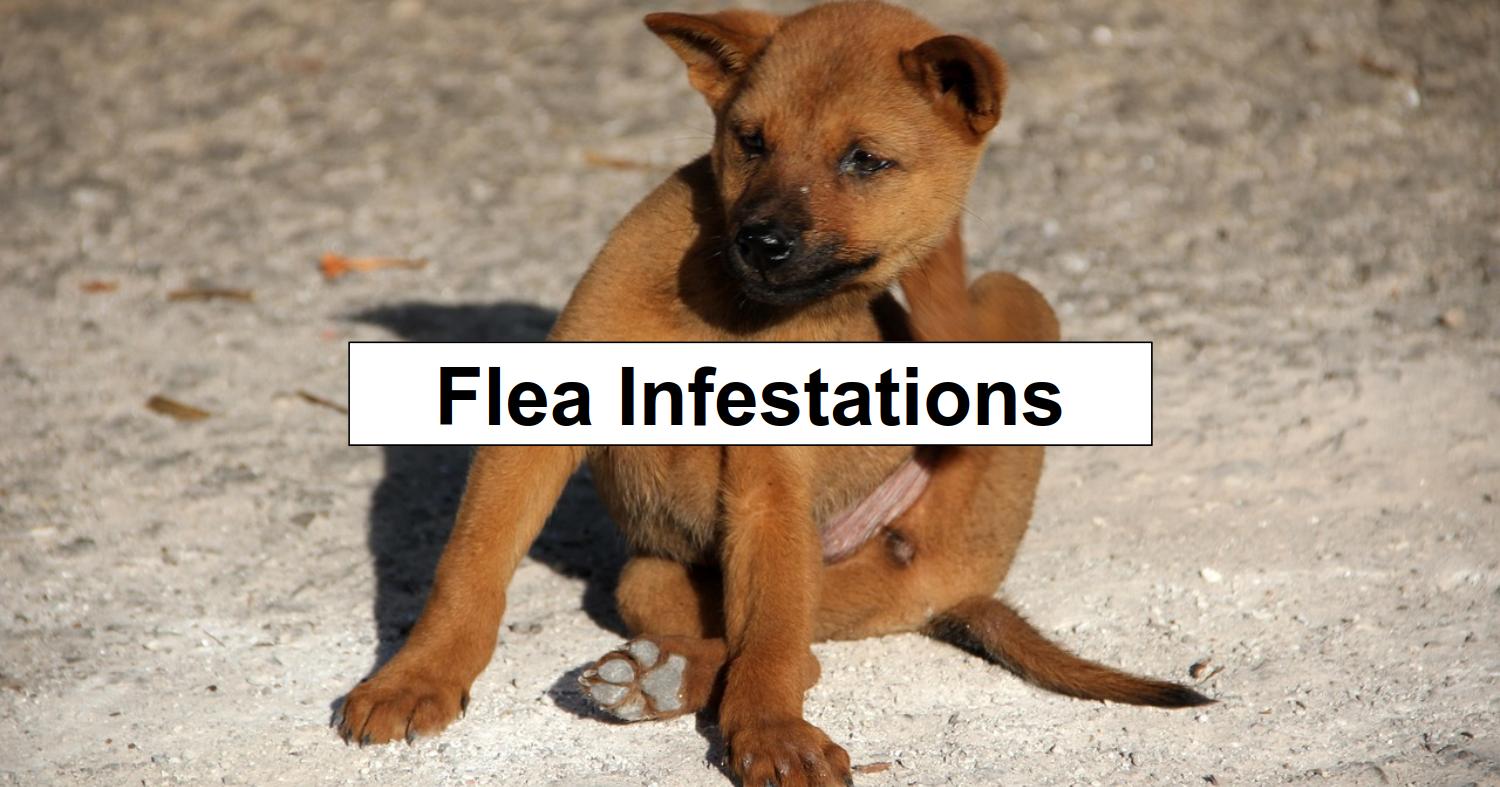
A thread over on Survivalistboards.com caught my attention recently, as they have been of late. A guy who runs a shop in a city that tried a catch-and-release program for feral cats shared what happened next … the program backfired badly because neutering feral cats removes a lot of their drive to hunt, so the colony grew without the pressure that normally keeps it in check. Now fleas are out of control across the whole area, his dog can barely walk outside, and he spent serious time helping a friend deal with a room that had thousands of fleas in it despite no pets, no carpet, and no obvious reason for any of them to be there.
That last part is what got me: A room full of fleas with no apparent source? Yikes!
Turns out there’s a likely explanation, and once see it, the whole problem starts to make more sense, including why most people’s attempts to fix a serious infestation fails at first.
Why One Treatment Rarely Works
Fleas don’t all hatch at once. Instead, they cycle through eggs, larvae, pupae, and adults. It’s the pupae stage where things get tricky because flea pupae can go dormant for months with no food source. They just sit and wait, and when someone walks into the room after weeks away, the vibration and body heat trigger a massive hatching all at once. That’s why you can bomb a room, see nothing for a few weeks, and then get swarmed again. You didn’t miss any living fleas; you missed the ones that hadn’t hatched yet.
The guy in the thread actually discovered this the hard way. His friend’s upstairs room had been empty and closed up. No pets had been in there for ages, but the fleas were waiting, lying dormant in the cracks of the wood floor, and as soon as people started moving around in the space again, they hatched en masse, which sounds like the start of a horror movie to me. 😉
This is why treating once and stopping when things look better is the single most common mistake. Rather, you have to treat through multiple life cycles, which takes weeks or months, not a single day.
One practical tip from the thread: vacuum before you treat. It feels counter-intuitive, but the vibration from vacuuming triggers dormant larvae to hatch while you’re about to apply something that kills them. You’re making the problem temporarily worse on purpose to end it faster. Of course, be sure to throw out the vacuum bag when finished.
What Actually Works
The thread went through a lot of options, and a few things came up over and over, see below.
Diatomaceous earth (food-grade) was the top recommendation. It’s a fine powder made from fossilized algae that damages the exoskeleton of fleas, ticks, and ants, causing them to dry out and die. It’s safe for people and pets when used as directed, and you can sprinkle it on floors, into carpet, and some say you can even add it to stored food to control pantry pests, though I’ve yet to try that.
It’s not insant, and you have to keep applying it, but DE doesn’t require any chemical sprayers, it stores indefinitely, and like I said, is relatively safe. Some say the best applicator is a Harris Diatomaceous earth powder duster, though the powder I’ve used in the past comes with its own applicator tip for small applications.
Permethrin concentrate is what you want for a heavier infestation. Buy the 10% agricultural concentrate and dilute it yourself. It kills adult fleas and has residual effectiveness for a few weeks before you need to retreat. One thing to know: permethrin is toxic to cats. Keep that in mind if you have them, and keep them away from treated surfaces until the surface is fully dry.
Light traps, something I didn’t know was a thing, are low-tech but they appear to work. The guy in the thread set up a desk lamp over a small container of water with a few drops of dish soap mixed in. Fleas are drawn to heat and light, fall in, and drown. He documented it in photos. Three days later, the room went from unlivable to manageable. This won’t solve a serious infestation on its own, but it’s a useful addition and costs almost nothing.
Insect growth regulators, or IGRs, came up for bad infestations. Although they don’t kill adult fleas, they break the breeding cycle by stopping larvae from maturing into adults. You have to pair them with something that kills adults, and you need patience, but if fleas have really established themselves in a space, IGRs help interrupt the cycle you’d otherwise keep fighting indefinitely.
A few natural options also got mentioned, such as fleabane (a plant you can steep into a tea and use as a spray or rinse), peppermint oil (kills on contact but leaves no residual protection), and brewer’s yeast with garlic chews that are supposed to make dogs less appealing to parasites. Garlic is only safe for dogs in small doses, so if you go that route, stick to a product formulated specifically for dogs rather than guessing at amounts.
None of the natural options are a replacement for the prior suggestions, but they can supplement what you’re doing, especially if you’re trying to avoid harsh chemicals around kids or pets.
One more thing from the thread: even a Seresto collar, which does work, only kills fleas after they’ve jumped on the dog and stayed there for a while. It does nothing for fleas breeding nearby, so if the environment is infested, the dog will stay under siege regardless of wearing a flea collar or not.
Stocking Up for a Grid-Down Situation
If you have pets and a flea infestation hits during a disaster or extended grid-down situation, you’re going to want products on hand already because you can’t order permethrin when the internet is down or the stores are closed.
The good news is that Diatomaceous earth, permethrin concentrate, and IGRs all store well without refrigeration or special care. A few users in the thread mentioned keeping a year’s supply of flea treatment on hand as standard practice, and honestly that’s not a bad idea. It’s the same logic as stocking food, water, or medications.
If you’re not already thinking about your storage space in terms of pest control generally, I wrote about how to set up a pest-proof storage area here. Remember that rodents and insects can wipe out a food supply fast, and most of the same principles apply whether you’re dealing with fleas, ants, or mice.
The mystery room in the thread, by the way, was never fully solved. Even after treatment, the owner suspected the dog traveling in and out of the space without the owner’s knowledge was reintroducing fleas each time. So, treating the environment without also treating the animal (and probably their vehicle) was always going to be a partial fix only.
Ultimately, if you’re dealing with an infestation, ask yourself whether you’ve really covered every source, not just the most obvious one, where the fleas are.
What’s worked for you when dealing with fleas or other insect infestations? I’m curious whether anyone has tried the light trap method and actually seen results or something like it.
Leave a Reply