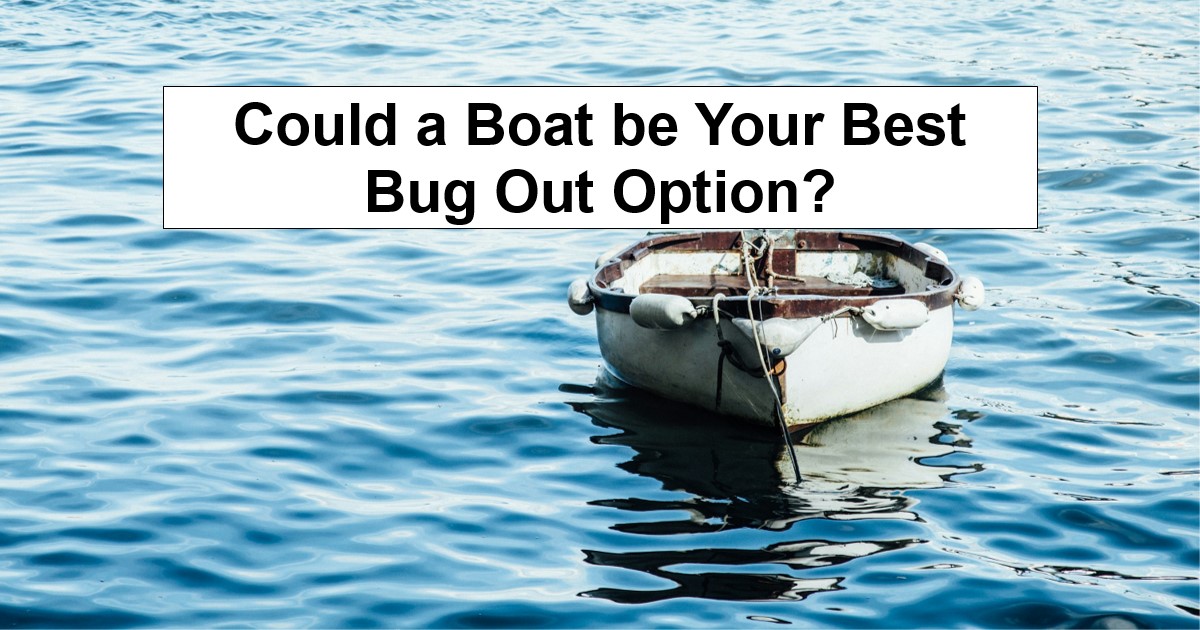
Most bug-out vehicle conversations center on trucks, 4x4s, and trailers loaded with gear. Roads, routes, and fuel economy are close seconds. Interestingly, waterways almost never come up. And honestly, for most people, that makes sense. But for some, ignoring water as a bug-out option might be a real mistake. Maybe.
It came up recently in another thread on Survivalist Boards, and the discussion was worth thinking through. The core idea is simple: when roads are gridlocked and bridges are jammed, water routes often stay open. We’ve talked before about whether interstates are really a death sentence during a bug-out, and the honest answer is “it depends.” The same logic applies here. Water isn’t a universal solution. But in the right geography and given the right situation, it might be the best one you have.
Living in Kansas City, this conversation doesn’t apply much to me personally. The Missouri River runs through town, sure, but navigating it under duress isn’t exactly a practical plan. When I lived in western Washington, though, it was a completely different picture. Water was everywhere: the Puget Sound, rivers, inlets, bays. I’d often wondered that if something had gone seriously wrong there, whether getting out by boat would’ve made a lot more sense than sitting in gridlocked traffic on I-5 to nowhere.
That’s really the first point worth making: location determines whether this is even an option.
The Case for Water
The strongest argument for bugging out via waterway is what you avoid. Roads concentrate people. Bridges become choke points, and there were plenty of those where I lived. When panic sets in, highways turn into parking lots fast because people start driving like idiots or just run out of fuel. Water routes sidestep all of that because you can move at night, stay quiet, and avoid populated areas in ways that simply aren’t possible on land.
There’s also the food angle. Fishing from a boat gives you access to deeper water where shore-bound people can’t reach. Set a trot line or a net overnight and you’ve got protein without burning supplies. That’s not nothing in a long-term scenario. Granted, I’d be as likely to catch something entirely inedible or poisonous, so I’d leave this to the folks who know what they’re doing!
The most compelling option from the thread, at least for coastal preppers, is a sailboat. A used ocean-capable sailboat in the mid-30-foot range can be had for around $30,000 right now. It needs little to no fuel, assuming you know how to sail. Pair it with some solar panels and a rain catchment setup and you’ve got power and fresh water covered to a point. As a combined bug-out vehicle and location, it’s hard to beat a boat on paper. But, if it were me, I’d be focusing on something gas-powered with enough extra fuel onboard to get me well away from the problems on land and forget the water catchment or solar.
For smaller-scale problems, somebody suggested that even a cheap inflatable has potential value. Blocked bridge? Inflate it, cross the river, deflate it, keep moving. A $100 thrift store inflatable isn’t a bug-out platform, but it solves a specific problem cheaply. That said, I can’t imagine hauling something like this around for just such a problem unless you expected a blocked bridge, as in this example. This is a stretch.
The Reality Check
Here’s where it gets problematic.
Sitting on water makes you visible. A boat loaded with gear is a floating advertisement for resources, if not a reason to be shot at by somebody with a misplaced grudge. In a serious collapse scenario, that visibility is a real liability. On land you can blend in, hide, and possibly move through cover. On open water you’re exposed, at least, if you’re close to land. I wouldn’t venture too far from shore without a real, sizable boat.
Remember, too, that fuel-powered boats have a short survival window. When the gas runs out, you’re stuck on the water with no good options, except maybe a paddle or two. At least a stalled vehicle can become a temporary shelter and, like it or not, leaves you on-foot. A powerboat drifting in open water is a different kind of problem, potentially a deadly one.
The sailboat argument is compelling until you factor in the skills required. Ocean navigation, reading weather, and actual seamanship aren’t something that can be picked up from a survival manual or even a weekend crash course. And maintenance costs are brutal even in normal times. Dockage, bottom paint, sails, engine work, and who knows what else just to keep a vessel seaworthy aren’t cheap or quick.
Then there’s also the obvious problem for a large portion of the country: if you’re landlocked, this conversation is mostly academic.
What Most People Should Actually Consider
The forum thread landed on a sensible bottom line. Most people fall somewhere between a $100 inflatable and a $30,000 sailboat. And for most people, a simple fishing boat or a kayak gives them real options without the cost and complexity of a sailboat.
A kayak, for example, is quiet, portable, doesn’t need fuel, and can navigate shallow water that a motorboat can’t touch. A fishing boat with a small outboard covers more ground and can carry more gear. Neither requires serious capabilities to operate, and both give you options that you flat-out don’t have if you’re stuck on congested roadways.
The question worth asking is whether water should even part of your bug-out reality. If you live near rivers, coastline, or lakes that connect to where you’d want to end up, and you’re relatively fit and confident in your waterborne ability, it’s worth considering. If not, your energy is probably better spent on other preparations. (My bug-out bag book covers the core essentials most people overlook when planning to leave in a hurry, including bug out routes, though water evacuations are not covered.)
As with most things in preparedness, the answer isn’t “boats are great” or “boats are useless.” It’s that your location, your skill set and abilities, and your specific bug-out scenario determine whether water is an asset or a liability. Figure out which one it is for you, and plan accordingly.
Leave a Reply