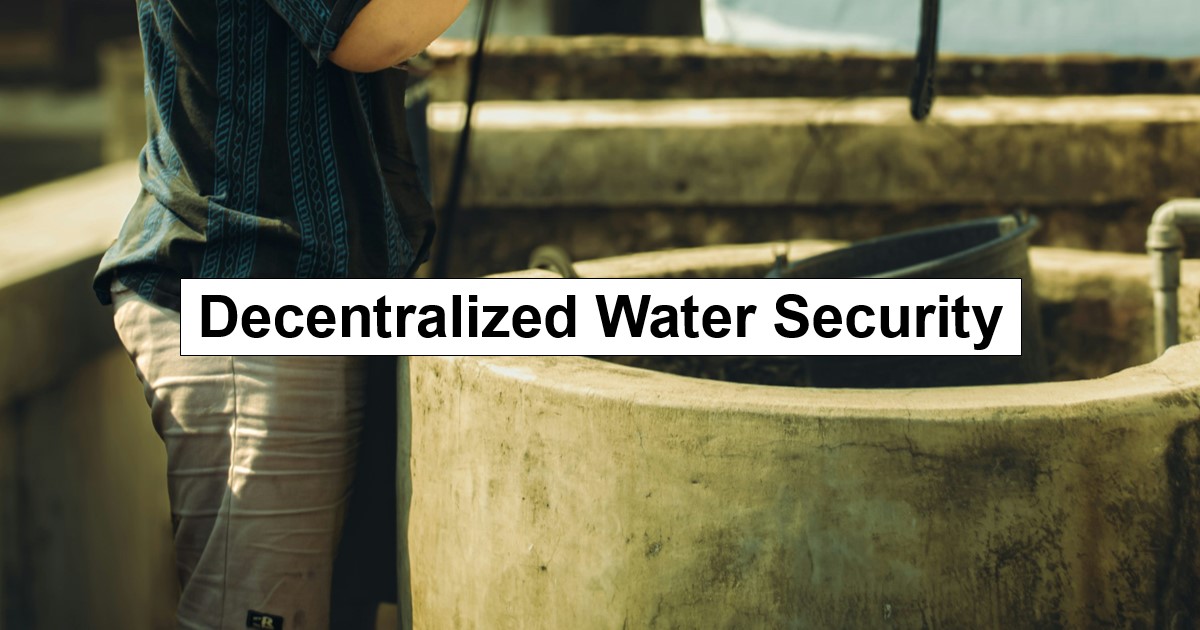
When people think about preparing for SHTF scenarios, food stockpiles and security plans often come first. However, seasoned preppers know that water security is the real cornerstone of survival. Without reliable access to clean water, even the best-prepared household quickly runs into serious trouble. That’s why small towns with private wells are gaining attention. They offer a level of independence that centralized systems lack.
Why Decentralized Water Matters in SHTF
Modern cities rely heavily on centralized water systems. These systems depend on electricity, treatment facilities, and complex infrastructure. In a crisis, whether it’s a natural disaster, grid failure or supply chain disruption, these systems can fail fast.
Small towns, especially those with private wells, operate differently. Instead of relying on a single large system, distribution and access to water are across individual properties. This decentralized approach reduces vulnerability. If one well goes down, others can still function. For preppers, this kind of redundancy is a major advantage.
A private well also eliminates dependence on municipal water treatment. While that might sound risky at first, it actually gives property owners more control over their water quality and access — two critical factors during emergencies.
Private Wells as a Strategic Prepper Asset
For preppers seeking long-term resilience, a property with a private well is both convenient and strategic.
First, it provides a consistent water source that doesn’t rely on public utilities. Even during power outages, many wells operate with backup generators, solar systems or manual pumps.
Second, wells support self-sufficiency. Water is more than for drinking. It’s also essential for cooking, hygiene, gardening and even livestock. In a prolonged crisis, having water on-site allows households to maintain a more stable and sustainable lifestyle.
Third, owning a well can increase property value and long-term viability. In uncertain times, land with independent water access becomes far more desirable than properties tied solely to municipal systems.
A significant number of households already rely on independent water sources. In the U.S., more than 43 million people get their drinking water from private wells. This widespread use highlights that decentralized water systems are proven, everyday solutions that support long-term water security.
Water Safety: What Preppers Need to Know
Many people assume that access to water is the biggest hurdle in a crisis. However, treatment is as important. While private wells offer independence, they also come with responsibility. Unlike municipal systems with regular regulation and testing, private well owners must monitor their own water quality.
Contaminants can enter well water from natural sources or human activity. These contaminants may include bacteria, nitrates, heavy metals and chemicals. For example, arsenic is a naturally occurring element that can seep into groundwater in certain regions. Homeowners need to stay informed about these risks and take proactive steps to address them.
For example, boiling water can remove most biological contaminants, but not chemical pollutants such as heavy metals or arsenic. This limitation often gets overlooked. Having water isn’t enough — it must also be safe.
Regular testing and proper filtration systems, such as reverse osmosis or activated carbon filters, can significantly reduce these risks. In a prepper mindset, it’s an opportunity to take full control over water safety. Preppers who invest in proper filtration and testing systems can ensure their water remains usable.
Pros and Cons of Having a Private Well
Like any preparedness strategy, owning a private well has both advantages and challenges. Understanding both sides helps preppers make informed decisions.
Pros:
- Independence from municipal systems: No reliance on public water infrastructure during SHTF
- Long-term cost savings: Eliminates monthly water bills over time
- Reliable access: Provides a consistent source of water for drinking, agriculture and sanitation
- Scalability: Can be paired with filtration, storage tanks, and backup power systems
- Increased resilience: Decentralized systems are less likely to fail entirely
Cons:
- Maintenance responsibility: Owners must handle repairs, testing, and upkeep
- Potential contaminants: Wells may contain harmful substances if not properly monitored
- Initial installation cost: Drilling and setup can be expensive up-front
- Power dependency: Most wells require electricity unless modified for manual use
The key takeaway is that while private wells require effort, they offer unmatched control, something every prepper values.
Why Small Towns Have the Edge
Small towns naturally align with preparedness priorities. Lower population density reduces competition for resources. Local communities often have a stronger culture of self-reliance. When combined with private wells, these areas become even more resilient.
In contrast, urban environments face higher risks during SHTF scenarios. Water shortages, infrastructure failures and supply disruptions can escalate quickly when millions depend on a single system. Small towns with decentralized water sources avoid many of these issues.
Rural properties often offer space for gardens, livestock and water storage. This case creates a more complete survival setup, one where water security supports food security and overall independence.
Building a Water-Secure Future
For preppers, water security is both about survival and stability. A private well represents a shift from dependence to control. It allows households to operate on their own terms, even when larger systems fail.
However, preparation goes beyond drilling a well. It includes testing water regularly, installing reliable filtration and ensuring backup power options are in place. These steps turn a basic water source into a robust, long-term solution.
In a world where uncertainty is always a possibility, decentralized water systems offer a clear advantage. Small towns with private wells are surviving and thriving when others struggle.
Leave a Reply