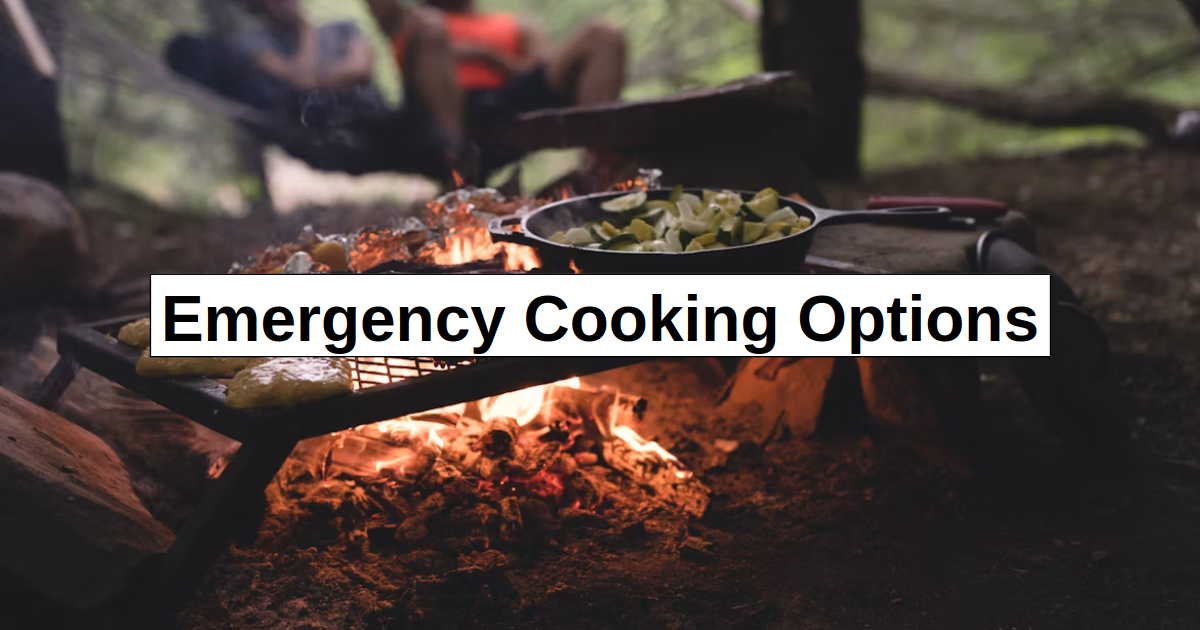
I’m slowing trying to go through some of the stuff we own, and as much as I’d like to complain about everybody else’s belongings, I’ve got my fair share of items that I need to reconsider, even prepping gear. For example, I’ve got a metal rocket stove I’ve used twice, and a makeshift device that’s only partially finished. I’ve got two solar ovens, one still in its box (it’s my mother-in-laws) and one of my own that I haven’t touched in a decade. There’s more cast iron cookware in the garage that I haven’t used in years, either, and also stuff I use every single week.
That contrast got me thinking about what actually matters when the power’s out and you need to eat. What’s truly worth keeping and what am I hanging onto that just feels useful?
Home vs. Bug-Out Cooking
If you’re cooking at home during an outage, weight probably doesn’t matter. Cast iron wins here, and it’s not close, since it’s nearly indestructible, cooks over almost any fuel source, and you can find it cheap at thrift stores and yard sales. I’ve got pots and pans that are decades old and still work fine.
(Note: If you want to go deeper on cooking without relying on your stove or microwave, I covered more of that ground in this article on cooking without power. And if you want to get more out of that cast iron beyond the basics, I put together a list of Dutch oven recipes worth trying.)
Stainless steel is the other reasonable choice for home use, especially all-metal builds with no specialty handles that melt or crack when things aren’t perfect, such as over an open flame. Carbon steel has fans too, though I haven’t found a strong case for it over cast iron as a prepper beyond personal preference.
Bugging out changes things, since weight matters, and titanium becomes an easy answer. It’s light, durable, and packs down small. But it’s not perfect. Titanium is expensive, and food sticks and burns on it more than it does on other metals until you get some practice in. I’d rather you know that going in than have you frustrated with a scorched dinner on night one. That said, many lightweight camp stoves are some sort of aluminum, which is fine too; it’s what my backpacking stove it made of.
What You Cook With Matters
Twig-burning backpack stoves are a solid middle ground for portable cooking; I’ve got a few of these too. They fold flat, weigh next to nothing, and run on whatever wood you find along the way. Rocket stoves do something similar for home use, just on a larger scale.
If you want water boiling fast, a Kelly Kettle is hard to beat. Just don’t expect to rest a heavy pot or skillet on top of one. It’s built for one job, boiling water, and does it well.
Butane and propane camp stoves are a viable middle choice most people already own because they’re simple, reliable, and you can stockpile fuel canisters without much hassle. But the fuel prices alone are becoming too much for a “just in case” mentality.
This brings me to solar ovens that let you cook without fire, smoke, or fuel at all. I posted about building your own reflector setup in my parabolic mirror solar cooking piece if that route interests you, but there are many good solar oven designs available. It’s a good option for anyone worried about minimizing light, noise, and smell … all of which attract two-legged predators.
Gear That Gathers Dust is Useless?
I’ve seen preppers, me included to a point, with surplus stoves that never got lit, and cooking equipment that sat in a basement for over a decade … ugh, me again. Meanwhile, the same people cook with a cast iron skillet almost every day and know how to season it blindfolded.
That’s an important lesson because the fanciest piece of cooking equipment you own is nearly worthless if you never practiced with it before you needed it. A simple setup you actually use, and know how to use well, beats an expensive one you’re learning on the fly during a crisis.
Like I said from the start, I own plenty of cooking stoves and whatnot. Some of it gets used, but most of it is for “just in case” purposes at this point. The problem, as you might suspect, is that if I ever needed to cook food or boil water without fuel or even biomass (wood), then those solar ovens would be awfully handy. And that means I can’t get rid of them. Same goes for almost everything other piece of cooking equipment I own.
The question, of course, is what’s useful to you? I could give you my list, but a solar oven is a lot more useful where I live now in the Midwest than it was in Washington state where it rained a lot. Similarly, that metal rocket stove I hang onto could be exceedingly useful, since I can gather a lot of twigs and branches around my property. But if I lived in Arizona, it might not be.
So take stock of your situation. What’s likely useful where you live? What cookware do you reach for week after week? Center your preparation around that, and you’ll be a lot further along than most people who haven’t given it a thought.
Leave a Reply