I’ve been warning about economic collapse for years now. Not because I enjoy being a doomsayer, but because history has a nasty habit of repeating itself. And when it comes to hyperinflation, the pattern is remarkably consistent.
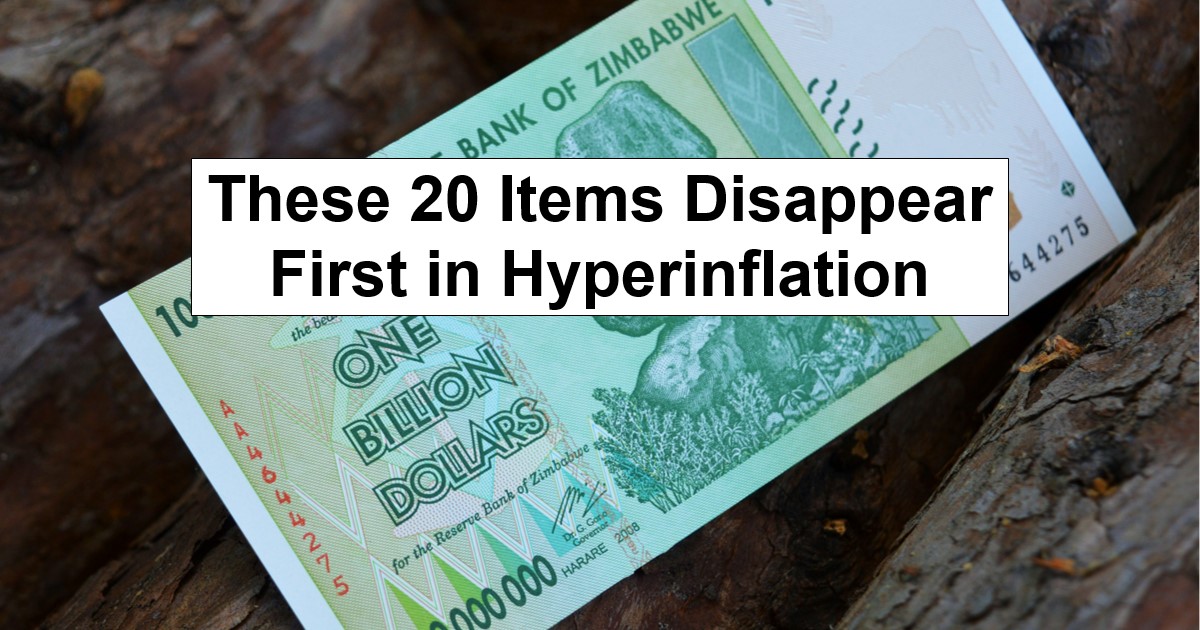
Thankfully or not, we have several examples to learn from, including Weimar Germany in the early 1920s, Zimbabwe in 2008, Venezuela from 2016 to the present, Yugoslavia in the early 1990s, and more. (I wrote about hyperinflation in my most recent book, Why We Prepare: Lessons from the Past, Warnings for the Future, if you’re interested in more details.)
Each crisis looked different on the surface, but the same items vanished from shelves in roughly the same order every single time, give or take. Historically, price controls, currency debasement, and eroding public trust break markets long before the resources themselves disappear, though with Just-in-Time (JIT) delivery being the norm these days, supplies won’t last long.
So what vanishes first? And more importantly, what should you be stockpiling now while you still can? Here’s what I gathered…
The Top 20 Most Critical Items
1. Prescription Medications
This sits at number one for good reason. Insulin, heart medications, blood pressure drugs, and antibiotics all depend on complex supply chains and foreign imports. When currency collapses, pharmaceutical companies stop shipping. During its collapse, Venezuela proved this with devastating clarity as people died waiting for medications that simply weren’t coming no matter how much money people had. The bottom line: pharmacies empty early in every hyperinflation event.
2. Baby Formula
Young parents will trade almost anything to feed their infants. If a mother can’t breastfeed, her baby starves without formula. Zimbabwe showed how formula vanishes quickly because desperate parents bought every container they could find, what most people call hoarding. But they were the smart ones; the ones who acted before everyone else. No doubt that black market premiums became astronomical for everyone else.
3. Fuel (Gasoline and Diesel)
Without fuel, transportation stops; generators won’t last long; chainsaws and other tools are useless. On a larger scale, food doesn’t reach cities; water treatment plants cease to work; most everything else grinds to a halt too. People can’t evacuate easily, even if they could still bug out on foot. Both Weimar Germany and Venezuela saw fuel lines stretch for miles. Worse, governments often seize what’s left for military or emergency use, leaving people like you and me with nothing.
4. Clean Drinking Water
Municipal water systems need chemicals, electricity, and paid workers to function. Hyperinflation breaks all three fairly quickly. After all, how long would you continue to work when the value of your effort diminishes by the day, if not by the hour? As expected, Zimbabwe experienced cholera outbreaks when water treatment plants simply stopped operating. Water becomes intermittent first, then unsafe. Neither problem is one you want.
5. Staple Foods (Rice, Flour, Beans, Grains)
Stores empty in hours once panic sets in, largely because of the JIT systems grocery stores employ to reduce costs. But the bigger problem is that farmers stop selling, and sometimes can’t grow because they can’t get the chemicals and seeds they need. Worse, farmers may become targets for the many, many unprepared. Venezuelans, as a continuing example, lost an average of 20 pounds during their crisis, and I suspect that Americans will lose even more. Bread lines and ration cards appeared within weeks to calm the masses, but I’m afraid even that won’t be enough to quell the chaos when desperate Americans hit the streets.
6. Cooking Oil
It’s high in calories, used in almost every meal, and difficult to produce at home. It also goes rancid over time, making long term storage a bit tricky. Zimbabwe’s shelves stayed empty of cooking oil for months at a stretch; same goes for other countries, like Argentina, if I remember right. Cooking oil is one of those items that is easily overlooked by most until people realize its intrinsic value.
7. Salt
Again, this might sound basic, but salt preserves food and is essential for human health. Ancient trade routes existed specifically for salt. And I’m pretty sure Roman soldiers were paid in salt … unless that’s just a myth. (Could you imagine being paid in salt these days, lol?) When refrigeration fails (and it absolutely will during hyperinflation), salting meat, as an example, becomes one of the only ways to make food last longer than mere hours.
8. Matches and Lighters
Fire means survival in many parts of the country during winter cold, but don’t underestimate the crucial need for fire during the summer to cook food and boil water. After all, gas stoves fail when propane runs out, and electric stoves are useless when the grid goes down. Plus, it’s still difficult to cook or stay warm without the ability to start a fire. Matches and lighters are small, lightweight, and immensely valuable in trade if you have a lot of them. But since fire is so critical to survival, I recommend NOT trading them.
9. Soap and Hygiene Items
Disease spreads fast without basic hygiene. Venezuela saw scabies and other preventable illnesses explode across the population. Manufacturing these items requires raw materials that stop arriving when imports halt, and I don’t know about you, but I haven’t a clue how to make most hygiene supplies aside from deodorant and some household cleaners. (Mental note: learn how to make more hygiene supplies!)
10. Batteries
Lanterns, flashlights, headlamps, AM/FM/weather radios, handheld radios, and more all need power. When the grid fails batteries become crucial. Zimbabwe proved this repeatedly. Although you can alleviate this to a degree by opting for fuel-powered devices, like kerosene lamps, I still recommend battery-powered devices for safety. Besides, batteries last a long time (up to a decade), some can be recharged (often freely using a solar powered battery charger), and are highly barter-able.
11. Feminine Hygiene Products
Supplies vanish fast! Apparently, women in Venezuela resorted to using newspaper and rags. This is a dignity issue as much as a health issue, but don’t overlook how problematic menstruation can be for many women when these products no longer exist. Yes, they make reusable pads and Diva cups, which are a viable option if you have the ability to wash them well.
12. Diapers
Back to babies. Parents in crisis economies often washed and reused cloth diapers or improvise with whatever they can find. It’s a desperate situation for families with babies, and these items command extreme premiums on black markets. My wife will tell you from experience that cloth diapers were a real mess; we used them for both of our boys for years. And if we didn’t have a washing machine, I don’t think it would’ve worked without a lot of effort, plenty of soap and water, and questioning why we didn’t use disposables.
13. Toilet Paper
Venezuela became internationally famous for this shortage. People used corn cobs, leaves, and newspaper. It sounds almost humorous until you’re living it. I’ve written about toilet paper alternatives before, but one of the easiest ways to deal with a shortage of toilet paper is to switch to a bidet, assuming the water continues.
14. Candles
As I’m mentioned before, power fails constantly during hyperinflation. Rolling blackouts become scheduled blackouts, which become no power at all. And as our ancestors knew all too well, dark nights are dangerous nights. A simple light source becomes precious both inside and outside the home. Have lots of lighting options! Yes, many recommend candles, which is why they’re included here, but there are better, safer options in my humble opinion. These include any sort of LED flashlight, lantern, or headlamp. Many LED options can be had for a few dollars each. They’re not the best, but better than nothing. Hence, why batteries are crucial to stockpile.
15. Seeds for Growing Food
Once stores empty, growing your own food shifts from hobby to survival. But seeds sell out fast to anyone who see what’s coming, which should include you. Heirloom seeds (ones that produce viable seeds beyond a single year) become especially valuable. I’ve stashed seeds in the deep freeze for this very purpose.
16. Manual Tools
Axes, saws, hand drills, wrenches … you name it. Power tools are potentially useless without electricity or fuel for generators to power their battery packs. Hand tools, however, keep working indefinitely so long as they don’t break or get lost, which reminds me: have at least two of anything important. Zimbabwe, as an example, saw prices for basic tools skyrocket as people realized nothing was getting fixed otherwise.
17. Antibiotics and First Aid Supplies
I know I mentioned antibiotics previously, but they deserve a second mention here. After all, sometimes even minor cuts become potentially fatal despite appropriate treatment. Worse, hospitals ration what little they may have for all but the worst situations. Then, counterfeit medications flood black markets. Bandages, syringes, and gloves all become scarce as store shelves empty. I’m not saying you need a fully-stocked medical bag, but you don’t want five-year-expired antibiotic ointment and a few finger bandages as the bulk of your options. If worse comes to worst and you have to fend for yourself, first aid supplies AND antibiotics are going to be critical.
18. Coffee and Tea
Morale matters more than people realize. These stimulants have consistently high trading value across every hyperinflation event. Weimar Germany saw coffee become a luxury barter item that could fetch surprising returns. Personally, I don’t drink coffee, so I wouldn’t stockpile it. But if you do, then I encourage you to stock beans and a way to grind them manually so you can keep your fix.
19. Cigarettes and Alcohol
Addicts will pay more than even parents might pay to feed their children. Every single hyperinflation event sees these items become alternate currencies almost overnight. Although I don’t recommend that you stock them even if you don’t use them, I wouldn’t be opposed to you doing so either. Although difficult for most of us to acquire, the same can be said for the many dozens of medications that people are on for anxiety, depression, mood swings, and a number of other ailments that, although not life-threatening, certainly become problematic for those coming off of these drugs. If that’s you, consider how you might ween yourself off of them should the need ever arise. Maybe talk to your doctor about such a scenario.
20. Birth Control
Back to babies yet again. Birth control becomes critical when you can’t feed the mouths you already have, and people are still going to have sex no matter what’s going on in the world. Condoms and related supplies disappear fast from pharmacies, and this isn’t something easily improvised. Rather than having an “oopsie” pregnancy, add birth control to your supplies.
11 More Items Not on the List (But Very Useful)
Beyond the items listed above, there are more supplies that I feel provide out-sized value during economic collapse. So, if you had to focus, consider these:
Warm clothing and blankets matter when you can’t heat your home. Hypothermia kills, and clothes don’t spoil. Sturdy shoes and boots become essential when transportation fails and everyone is forced to walk everywhere. Shoes wear out faster than people expect! Reading glasses are easy to overlook until your glasses break and you realize you can’t work or read without something; same goes for hearing aids, though I’m not there yet.
Sewing supplies (needles, thread, buttons, patches, etc.) keep clothes functional for years instead of months. Fishing line and hooks (and all their related parts) provide a protein source that keeps working long after your food stocks run low, assuming you have a good place to fish that isn’t bombarded by everyone else. Aluminum foil is weirdly versatile for cooking, food storage, signaling, and reflecting heat. And bleach disinfects water and surfaces; a small amount goes a long way but it doesn’t last forever, either. Honestly, quality gravity water filters are probably a better, if not more expensive, investment than bleach alone.
Plastic sheeting and tarps handle shelter repair, rainwater collection, and crop protection if you’re desperate. Duct tape fixes almost anything and holds value because it solves so many problems, at least temporarily. Zip ties and rope serve endless purposes for securing, repairing, and building too. And 5-gallon buckets have dozens of uses around the home; I say you can’t have enough!
The Takeaway
Shortages happen faster than people expect, and they’ll be driven even faster given our JIT supply chains. Even so, price controls kill supplies. Currency collapse stops imports even if those supplies exist in the world. And a lack of public trust breaks even local markets and barter economies to a point.
The time to prepare is before shelves empty. For those wanting a more complete breakdown of what to stockpile and why, I put together my own supplies checklist in my book, Sold Out Forever. Or do a search online and you’ll get close enough. (Hint: the answer is NOT milk and bread.)
History says economic collapse is horrible, and the way we’re spending money, I’m afraid it’s going to be a real mess for a long time. Granted, collapse hasn’t happened yet despite my concerns. So, maybe all of this will be for nothing. But I’d rather know I have some preparations than nothing at all with the way things are going.
And, as I’ve mentioned many times before, most of these items will be useful to you in the future, their prices rarely go down, and they will be horribly difficult (if not impossible) to acquire once everyone else realizes the shit has finally hit the fan.
Leave a Reply to Jean Marchese Cancel reply