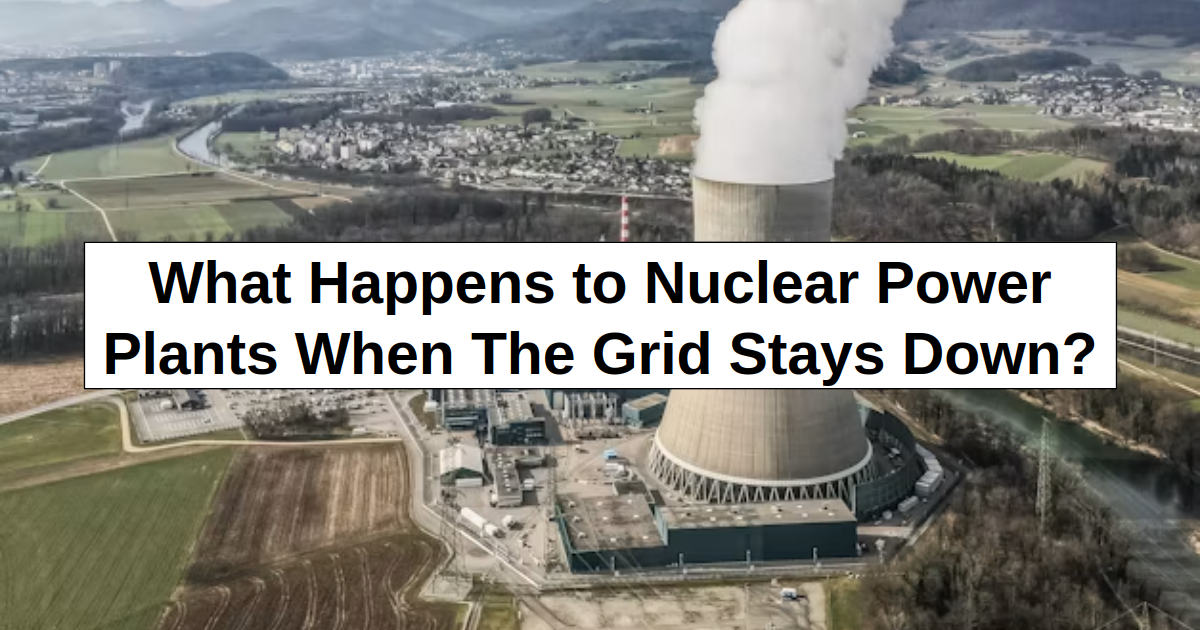
I got to wondering: what happens to America’s nuclear plants if the grid stays down long enough that emergency diesel fuel runs out?
I’m not talking about a normal blackout lasting a few hours. I’m thinking about a major grid failure lasting days or weeks, with fuel deliveries disrupted, roads blocked, communications failing, and replacement workers unable to reach nuclear sites.
The good news is that running out of diesel doesn’t mean a reactor instantly melts down. Nuclear plants have several layers of backup power and cooling. The bad news is that those layers aren’t magic. Eventually, they depend on fuel, water, working equipment, and people.
What Happens When the Diesel Shipments Stop?
When a nuclear plant loses outside power, the reactor shuts down. The nuclear chain reaction stops, but the fuel keeps producing decay heat. That heat falls over time, yet it still has to be removed.
Emergency diesel generators supply power to equipment needed to keep the plant safe; batteries provide another source of power for controls and instruments. Apparently, some reactor designs also have steam-driven equipment that can keep moving cooling water without normal AC power, which was news to me.
If the emergency generators fail or run out of fuel while outside power remains down, the plant enters what the Nuclear Regulatory Commission (NRC) calls a station blackout. The NRC has long recognized that an extended station blackout can lead to “severe core damage” if cooling can’t be maintained. I’d imagine so!
Fukushima changed how U.S. plants prepare for this problem. After the 2011 disaster, U.S. plants added what are commonly called FLEX systems. These include portable generators, diesel-driven pumps, hoses, communications equipment, and other gear kept onsite for serious problems. The idea is to provide another way to maintain reactor cooling, containment, and spent-fuel pool cooling after normal systems have failed.
Federal rules now require plants to have plans for keeping those safety functions going indefinitely, either through onsite equipment or outside help and supplies. That outside support often includes more generators, pumps, fuel, and cooling water … and that’s the important detail.
“Indefinitely” doesn’t mean each plant has an endless diesel tank buried somewhere behind the reactor; it means the plan eventually depends on more supplies arriving.
Under normal disaster conditions, that’s plausible. The nuclear industry operates national response centers with extra equipment intended for shipment to stricken plants. Industry plans call for that equipment to reach an affected site within about 24 hours.
The rules require multi-reactor sites to handle emergencies affecting all their reactors at once. They also require enough staff and communications to carry out those plans during a site-wide event.
What Happens If The Whole Country is Struggling?
A disaster affecting dozens of separate nuclear sites is another matter entirely. There may be backup generators somewhere, but somebody has to move them, not to mention the diesel fuel to power them. Roads and bridges have to remain usable, which might not be the case. Trucks need drivers, too. Replacement plant workers need transportation because the people onsite can work 24/7 forever. Communications must function well enough to coordinate all of it, which means that something like a well-placed cyberattack on top of whatever is happening could foul up the entire response plan.
A nationwide grid failure lasting weeks or months would surely strain those assumptions. That doesn’t mean dozens of reactors would melt down, but it absolutely means the safety concerns increase as each backup layer is struggling or lost entirely.
Spent Fuel Is a Different Problem
The reactor core isn’t the only concern. In fact, it’s not even THE biggest concern because nuclear plants also store used fuel onsite.
Freshly removed fuel first goes into a spent-fuel pool. Spent fuel rods can remain in pools for between 5-10 years, with rods are replaced in the reactor every year or two. These pools contain a huge amount of water, with roughly 20 feet of water above the stored fuel in varying designs. That water removes heat and provides radiation shielding.
If normal pool cooling fails, nothing dramatic happens instantly. The NRC says operators have “substantial time” before pool water begins boiling, although the amount of time depends on the amount and age of fuel in the pool. Plants also have backup methods for adding water using portable equipment.
The problem becomes more serious if nobody can restore cooling or keep adding water to prevent the water from boiling off. If the pool level fell enough to expose hot fuel, fuel damage and radioactive releases are likely. And remember that recently removed fuel would create more heat than fuel that has been cooling for years.
Older fuel stored in dry casks is another story. Dry casks don’t need pumps or fans to keep the fuel cool. They use natural air circulation, with cool air entering low and heated air leaving through vents. The NRC describes these systems as passive, and their heat output keeps falling as the fuel ages.
If I were worrying about a long-term grid collapse, the pools containing spent fuel would concern me far more than anything else.
What Would I Do if I Lived Downwind?
First, I wouldn’t assume the NRC’s emergency planning zones are magic borders. The NRC uses an area of about 10 miles around a plant for planning against airborne radioactive releases. A second zone extends about 50 miles and focuses mostly on contaminated food and water. Those distances are planning tools, and protective actions can extend farther if conditions call for them.
So, living 60 or 100 miles away doesn’t make the issue meaningless. Neither does being “downwind,” since wind direction, weather, the size of the release, and how many reactors have trouble all matter.
I’d start by knowing where the nuclear plants around me are. Then I’d make sure I could receive emergency information without the grid or internet. A battery radio makes more sense here than relying on a phone notification, but I’m still a fan of backup options.
I’d also have enough stored food and water to remain indoors for weeks if need be. That matters because jumping into the car and evacuating at the first rumor of a radiation release could send you straight toward the plume or needlessly expose you when staying put would’ve been the better option.
CDC advice for a radiation emergency is straightforward: get inside, stay inside, and stay tuned. Close windows and doors, move toward a basement or interior part of the building, and turn off fans or HVAC equipment that brings outside air inside if possible. You want to remain “neutral” to the outside environment as much as possible, meaning you don’t actively draw in or expel air into your living area.
I’d still keep the vehicle fueled and have several evacuation routes in mind should it come to that. If officials tell you to leave, wind direction, radiation readings, road conditions, and the location of the release will determine which direction makes sense, so again, you should have some clue of where the radiation problems could be.
I don’t think a long blackout means America’s nuclear plants suddenly become ticking nuclear bombs. because that’s not how they’re designed, and there are more backup systems than I realized. But those systems eventually depend on the same things the rest of civilization depends on: fuel, transportation, communication, skilled people, functioning supply lines, and more.
If those things disappear nearly everywhere for long enough, either because of because of a massive grid failure or coordinated cyberattack, for example, nuclear plants don’t get a special exemption.
Leave a Reply